
Fiberglass Pools vs Concrete Pools
Fiberglass Pools
Fiberglass pools are pre-manufactured pools made from reinforced fiberglass. They come in a variety of shapes and sizes and are known for their smooth surfaces and ease of installation.
Fiberglass Pool Advantages:
- Ease of Installation: Fiberglass pools are delivered to the site fully formed, which makes the installation process relatively quick, typically taking just a few days.
- Low Maintenance: The non-porous surface of fiberglass pools resists algae growth, reducing the need for frequent cleaning. This surface also requires fewer chemicals to maintain balanced water chemistry.
- Durability: Fiberglass is a strong material that can flex with ground movement, making it less prone to cracks.
- Comfort: The smooth surface of fiberglass pools is gentle on the skin, reducing the risk of abrasions.
- Design Options: Fiberglass pools come in a range of pre-designed shapes and sizes, including built-in steps and benches.
Fiberglass Pool Disadvantages
- Limited Customization: Because fiberglass pools are pre-manufactured, there are limitations on size, shape, and depth.
- Initial Cost: While fiberglass pools can be cost-effective in the long run, the initial purchase price can be higher compared to vinyl liner pools.
- Transport and Installation: The size of the pool can make transportation and installation challenging, especially in areas with difficult access.
Concrete Pools
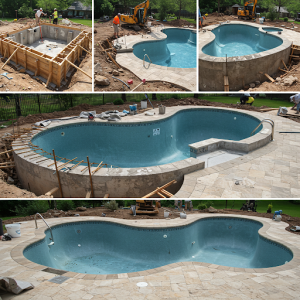
Concrete pools, also known as gunite or shotcrete pools, are constructed by spraying a mixture of concrete and sand into a steel-reinforced frame. These pools are renowned for their strength and versatility.
Advantages
- Customization: Concrete pools offer the highest level of customization, allowing homeowners to design any shape, size, and depth they desire.
- Durability: Concrete pools are exceptionally durable and can last for several decades with proper maintenance.
- Design Features: These pools can incorporate a wide array of features such as waterfalls, tanning ledges, and custom steps.
- Aesthetic Appeal: Concrete pools can be finished with various materials, including plaster, pebble, and tile, offering a range of aesthetic options.
Disadvantages
- Cost: Concrete pools are typically the most expensive to install due to the extensive labor and materials required.
- Long Installation Time: The construction process can take several months, as it involves meticulous planning, excavation, and building.
- Maintenance: Concrete pools require regular maintenance, including acid washing and resurfacing every 10-15 years to prevent algae growth and maintain the pool’s appearance.
- Rough Surface: The surface of concrete pools can be rough, which may cause discomfort for swimmers.
- Cracking: Concrete is susceptible to cracking due to ground movement, which can necessitate repairs.
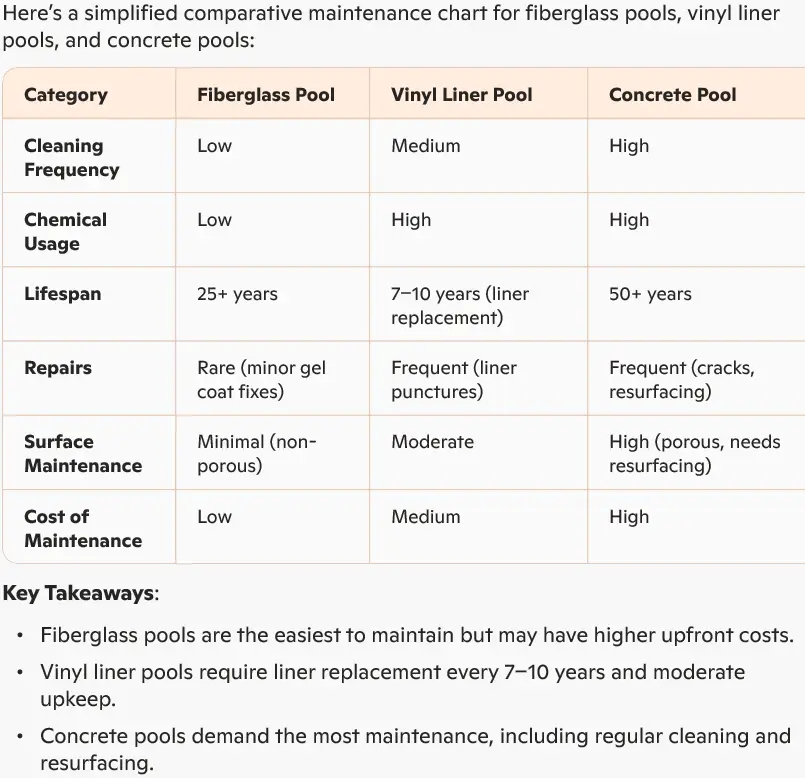
Comparison: When comparing fiberglass, vinyl liner, and concrete pools, several factors should be taken into account:
Initial Cost
Fiberglass pools generally have higher upfront costs compared to vinyl liner pools but are less expensive than concrete pools. Vinyl liner pools are the most budget-friendly option for initial installation.
Customization
Concrete pools lead the way in terms of customization, offering limitless design possibilities. Vinyl liner pools provide a high level of customization, while fiberglass pools offer predefined shapes and sizes.
Installation Time
Fiberglass pools have the shortest installation time, often completed within a few days. Vinyl liner pools take several weeks, while concrete pools have the longest construction period, lasting several months.
Maintenance
Fiberglass pools require the least maintenance due to their smooth, non-porous surfaces. Vinyl liner pools need regular upkeep to prevent liner damage, while concrete pools demand more intensive care, including periodic resurfacing.
Durability
Concrete pools are the most durable, capable of lasting for decades. Fiberglass pools are also highly durable, though not as long-lasting as concrete. Vinyl liner pools have the shortest lifespan, with liners needing replacement every 5-10 years.
Aesthetic Appeal
Concrete pools offer the most varied aesthetic options, with finishes such as plaster, pebble, and tile. Fiberglass pools have a sleek appearance but limited design choices. Vinyl liner pools can lose their aesthetic appeal over time as the liner fades or becomes discolored.
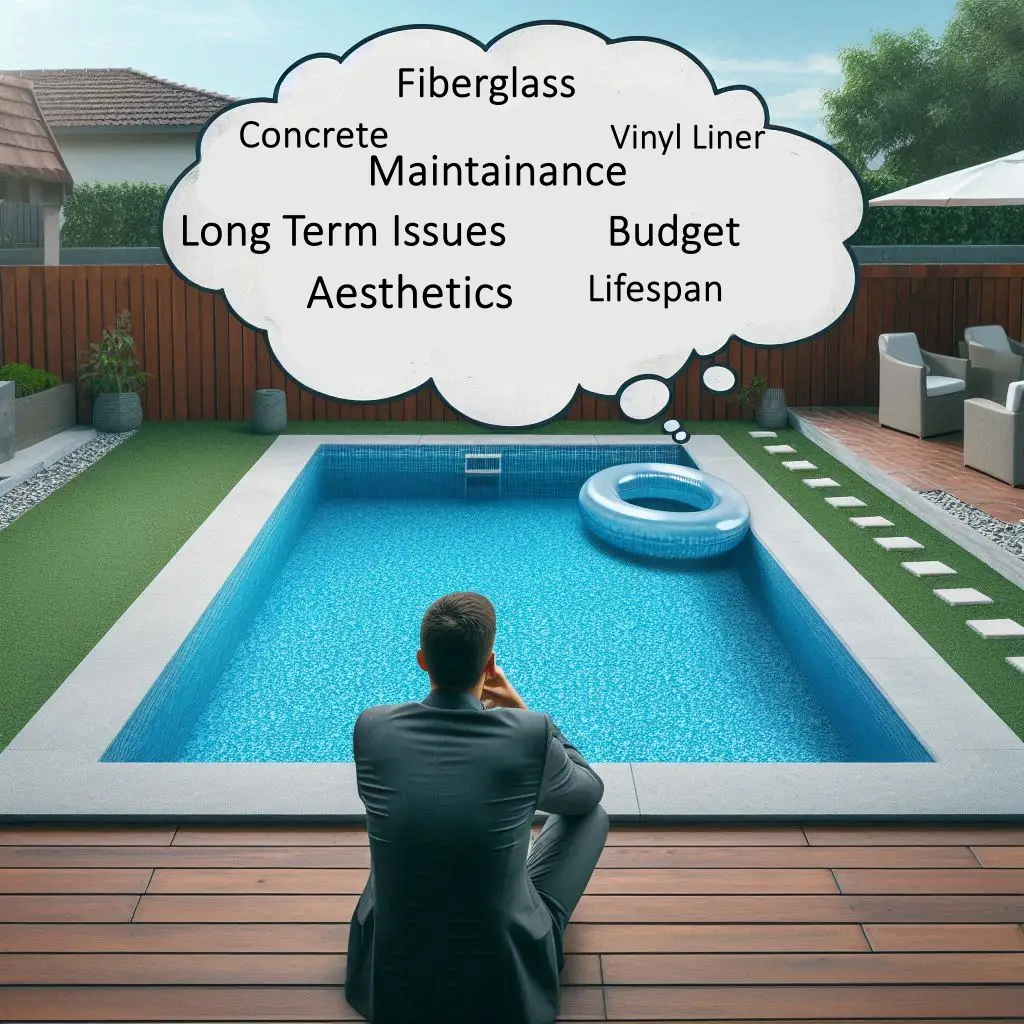
Choosing the right type of pool depends on individual preferences, budget, and long-term goals.
Fiberglass pools are ideal for those seeking a low-maintenance, quick-installation option with a smooth surface. Vinyl liner pools cater to homeowners looking for cost-effective, customizable solutions. Concrete pools are best suited for those desiring unique, durable, and aesthetically versatile pools, despite the higher costs and maintenance requirements.
By understanding the pros and cons of each pool type, homeowners can make informed decisions that best suit their needs and enhance their outdoor living spaces.
Ready to Dive In?
Please complete this form to be connected with a builder/installer in your area!
Complete walkthrough from planning to finishing touches
Cost breakdowns and financial planning
Comparison of materials: installation, maintenance, durability
Explores ways to personalize your pool—integrated features, finishes, decking styles, and how each choice impacts look and function.
Covers key advantages like smooth, non-porous surfaces, durability, and long-term low maintenance.
Insights on how fiberglass pools withstand elements over time and what makes them a lasting backyard investment.
Highlights reasons to go with fiberglass—rapid installation, comfort, cost-efficiency, and homeowner satisfaction.
Practical troubleshooting for common issues and how to address them
Explores 2025’s hot trend of natural, health-focused pool designs that blend eco-consciousness with relaxation.
Simple FAQ-style resource that breaks down expected lifespan and how maintenance impacts longevity.
In-depth comparisons between Rainforest models and alternatives—ideal for narrowing down choices.
Top arguments in favor of fiberglass over concrete pools