
Fiberglass Pools & Mississippi Soil Conditions
A homeowner guide to clay soil, drainage, rainfall, and fiberglass pool planning in Mississippi.
Planning a Fiberglass Pool in Mississippi Starts Below the Surface
Mississippi homeowners often think first about pool shape, size, color, and backyard design. Those details matter, but the ground beneath the pool matters too. Across many parts of Mississippi, soil conditions may include clay, moisture-retaining ground, drainage challenges, and seasonal movement caused by rainfall and dry periods.
A fiberglass pool can be a strong choice for Mississippi homes because the pool shell is manufactured as one complete structure before it ever reaches the backyard. When paired with proper site preparation, base material, backfill, grading, and drainage planning, fiberglass pools can work beautifully in many Mississippi soil conditions.
Rainforest Pools manufactures American-made fiberglass pool shells in Orlando, Florida and works through independent local builders who handle site evaluation, excavation, installation planning, and local project coordination.
Common Mississippi Soil & Site Conditions to Consider
Before planning an inground fiberglass pool, it helps to understand how soil, drainage, and yard conditions may affect the project.
Clay-Heavy Soil
Many Mississippi properties have soil that can hold moisture, become sticky when wet, and harden during dry weather.
Heavy Rainfall & Drainage
Rainfall can affect how water moves around the pool area, patio, landscaping, and surrounding yard.
Seasonal Ground Movement
Wet and dry cycles may cause some soils to expand, contract, or shift over time.
Sloped or Low-Lying Yards
Some Mississippi backyards need extra planning for elevation, runoff, access, or patio placement.
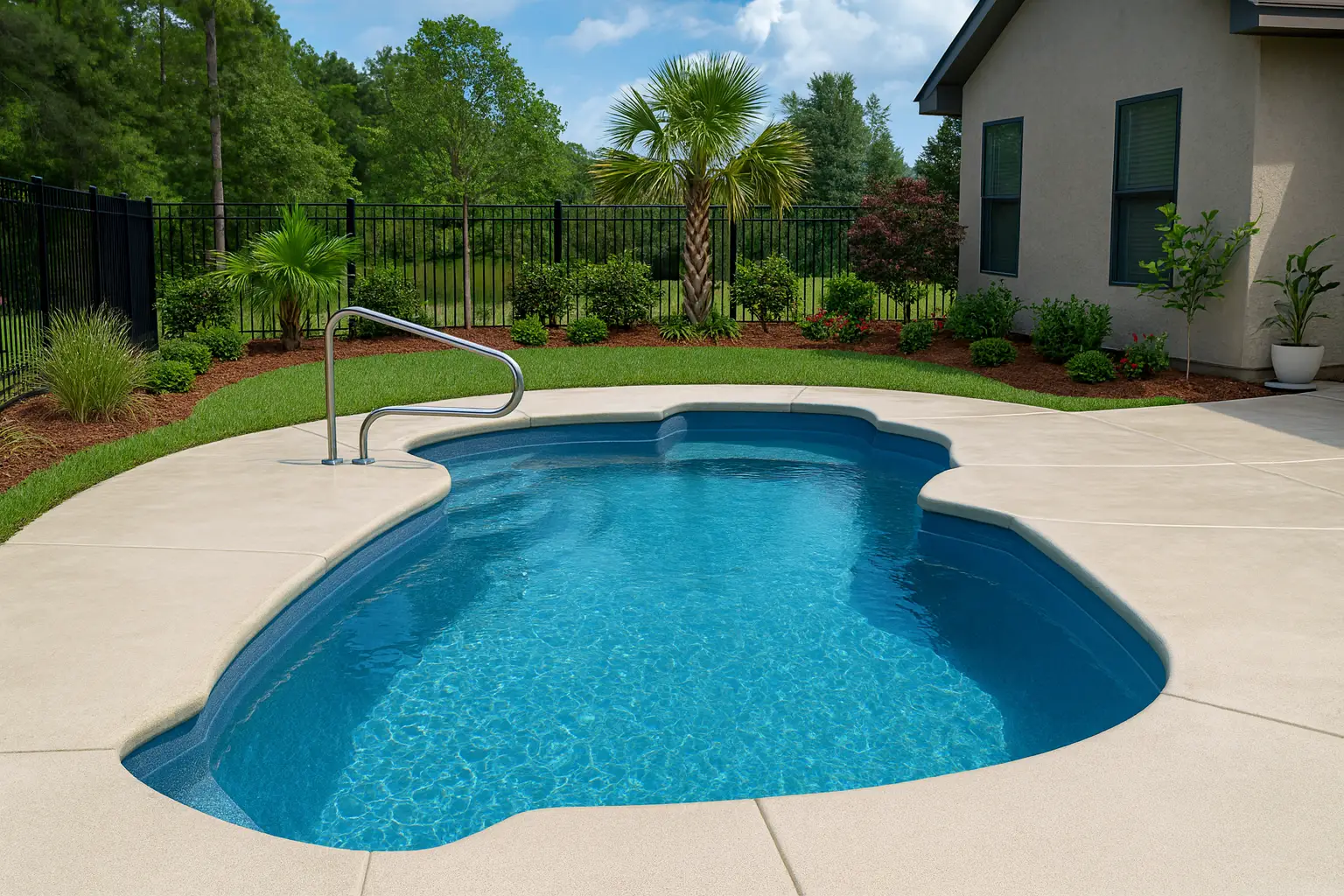
Why Fiberglass Pools Can Be a Smart Fit for Mississippi Backyards
Fiberglass pools are manufactured off-site as one-piece pool shells, then delivered installation-ready. This gives Mississippi homeowners a pool structure that is built in a controlled manufacturing environment before it ever reaches the backyard.
The shell is only one part of the project. A successful Mississippi pool installation also depends on proper site preparation, backfill, drainage, grading, and outdoor living planning.
- Proper excavation and elevation control
- Stable base material beneath the pool shell
- Correct backfill around the pool structure
- Drainage planning around the pool and patio
- Site access for delivery and installation equipment
- Patio, landscaping, and outdoor living layout
How Fiberglass Pools Are Installed With Soil Conditions in Mind
When a fiberglass pool is installed, the builder is not simply placing a pool shell in the ground. A quality installation considers the site, soil, elevation, drainage, access, and how the finished outdoor living area will work with the rest of the property.
Site Evaluation
The builder reviews access, yard slope, soil conditions, drainage patterns, utilities, and overall backyard layout.
Excavation & Base Prep
The pool area is excavated and prepared with attention to depth, elevation, and a stable base beneath the shell.
Pool Placement
The fiberglass pool shell is delivered and carefully set into position using appropriate equipment and site access planning.
Backfill & Water Management
Backfill and water levels are managed during installation to help support the shell and maintain proper positioning.
Drainage, Patio & Finish Work
The surrounding area is completed with attention to grading, water flow, patio layout, landscaping, and long-term usability.
Fiberglass vs. Concrete Pools in Mississippi Soil Conditions
Both fiberglass and concrete pools can be installed successfully in Mississippi when the site is properly evaluated and prepared. The difference is how each pool type is built, how it typically handles soil movement, and what homeowners should expect with long-term surface care.
Fiberglass Pools
- Manufactured as a one-piece pool shell before arriving at the home
- Installed on a prepared base with controlled backfill support
- Smooth, nonporous surface that is comfortable for everyday use
- Often faster to install than many site-built pool types
- Works well when drainage, grading, and site preparation are handled correctly
Concrete Pools
- Built on-site in stages using concrete or gunite construction
- Can offer highly customized shapes and design flexibility
- May require additional planning in clay-heavy or moisture-sensitive soils
- Surface can require more brushing, cleaning, and long-term care
- Long-term ownership may include resurfacing or refinishing over time
Practical Mississippi advice:
Soil type matters, but installation planning matters even more. Proper excavation, a stable base, controlled backfill, drainage planning, and grading around the pool all help create a better long-term result.
Compare fiberglass, concrete, and vinyl inground poolsRegional Soil Conditions Across Mississippi
Mississippi soil conditions can vary from one region to another. Clay-heavy ground, sandy coastal soils, flat Delta properties, high rainfall, and drainage patterns can all influence how a fiberglass pool project should be planned. The goal is not to make soil sound scary — it is to help homeowners understand why site evaluation, base preparation, backfill, grading, and drainage planning matter.
Central Mississippi
Jackson, Madison, Rankin & Nearby Areas
Central Mississippi often includes clay-heavy soils that can hold moisture during wet periods and become firm during dry weather. Proper excavation, base preparation, backfill, and drainage planning help support a successful fiberglass pool project.
Mississippi Delta Region
Flat Properties, Alluvial Soils & Drainage Planning
The Delta region may include flatter properties, alluvial soils, and areas where water movement and drainage need extra attention. Grading, groundwater awareness, and water management around the pool area can be especially important.
Mississippi Gulf Coast
Hancock, Harrison, Jackson County & Coastal Communities
Along the Gulf Coast, sandy soils may be more common, but groundwater, drainage, storms, and coastal moisture can affect project planning. Builders may need to evaluate water table conditions, access, grading, and proper backfill support.
North Mississippi
DeSoto, Tupelo, Starkville & Nearby Areas
North Mississippi properties may include a mix of clay and loamy soils, with conditions varying by elevation, slope, and nearby waterways. Yard access, drainage patterns, and seasonal rainfall should be reviewed before excavation begins.
Drainage Planning Matters in Mississippi Pool Projects
Mississippi rainfall patterns make drainage one of the most important parts of backyard pool planning. The goal is to help water move away from the pool area, patio, and foundation instead of collecting around the pool structure.
Mississippi Fiberglass Pool Soil FAQs
Is a fiberglass pool a good choice for Mississippi homes?
Yes. A fiberglass pool can be a strong choice for many Mississippi homes when the project is planned correctly. The one-piece pool shell, smooth surface, and efficient installation process make fiberglass appealing for homeowners who want a beautiful backyard pool with less routine surface maintenance than many other inground pool types.
What soil conditions should Mississippi homeowners consider before installing a pool?
Mississippi homeowners should consider clay-heavy soil, drainage, rainfall, yard slope, access, groundwater, and how water moves through the backyard after heavy rain. These conditions can influence excavation, base preparation, backfill, grading, and patio planning.
Do clay soils affect fiberglass pool installation?
- Clay soils can affect any inground pool project because they may hold moisture, become soft when wet, and harden during dry periods. Proper excavation, base preparation, backfill, and drainage planning are important when installing a fiberglass pool in clay-heavy areas.
Why does drainage matter around a fiberglass pool?
Drainage helps control how water moves around the pool area. Good grading and water management can help direct water away from the pool, patio, landscaping, and nearby structures instead of allowing it to collect around the pool area.
Can a fiberglass pool work in a sloped Mississippi backyard?
Many sloped yards can support a fiberglass pool project with proper planning. The builder may need to consider elevation changes, access, retaining features, grading, drainage, and how the patio or outdoor living area will connect to the rest of the yard.
Do fiberglass pools require less maintenance than concrete pools?
In many cases, yes. Fiberglass pools have a smooth, nonporous surface that can be easier to clean and maintain than many concrete pool surfaces. Homeowners should still maintain proper water chemistry, regular cleaning, and routine pool care. Review Fiberglass Pool Maintenance guide.
How much does a fiberglass pool cost in Mississippi?
Fiberglass pool cost in Mississippi depends on the pool model, site conditions, access, installation details, patio size, features, and local builder scope. Review Fiberglass Pool Pricing Guide.
Who installs Rainforest fiberglass pools in Mississippi?
Rainforest Pools manufactures fiberglass pool shells and works through independent local builders. Local builders typically handle site evaluation, permits, excavation, installation, drainage planning, plumbing and electrical coordination, and local project management.
Are fiberglass pools comfortable for families?
Yes. Fiberglass pools are known for smooth surfaces, comfortable steps and benches, and layouts that work well for relaxing, swimming, entertaining, and everyday backyard enjoyment. They can be a great fit for families who want a beautiful outdoor space without the rough surface feel of some other pool types.
How do I start planning a fiberglass pool in Mississippi?
Start by exploring fiberglass pool models, thinking about your backyard layout, and reviewing the features you want most, such as tanning ledges, benches, color options, patio space, and landscaping. You can also learn more about the benefits of fiberglass pools.